Compute Thought is a short cyberpunk point-and-click adventure game created for #Nar8, a narrative‑focused game jam. I usually lean toward gameplay and level design rather than writing, so this project was a deliberate exercise in story building. You can play it on itch.io or browse the source code on GitHub.
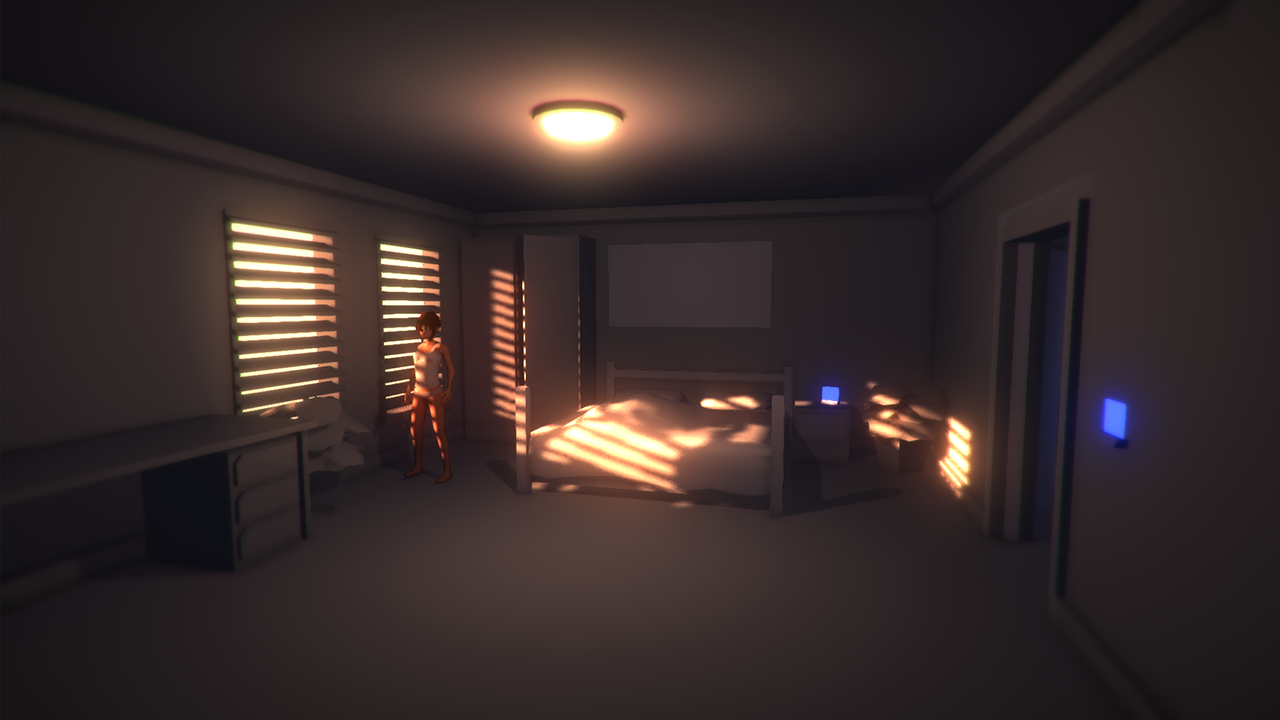 The opening scene is my favourite, but went through many iterations.
The game centers on a detective investigating a murder case, in a world where humans and androids coexist (uneasily). My favorite cyberpunk classics like Blade Runner and Ghost in the Shell inspired me.
I initially tried to stage a dramatic outdoor crime scene, grime, rain, harsh neon lights reflecting in the wet streets and puddles. I struggled building what I pictured in my mind; the outdoor scene felt empty. After several attempts I switched to indoor spaces exclusively, easier to decorate, but more importantly, easier to finish.
Originally the game flow was, introduction, learn the interface, travel to the crime scene, bursting through the door (handgun drawn), confronting the murderer. I ended up dropping the last part, too much work, focusing on the crime scene investigation.
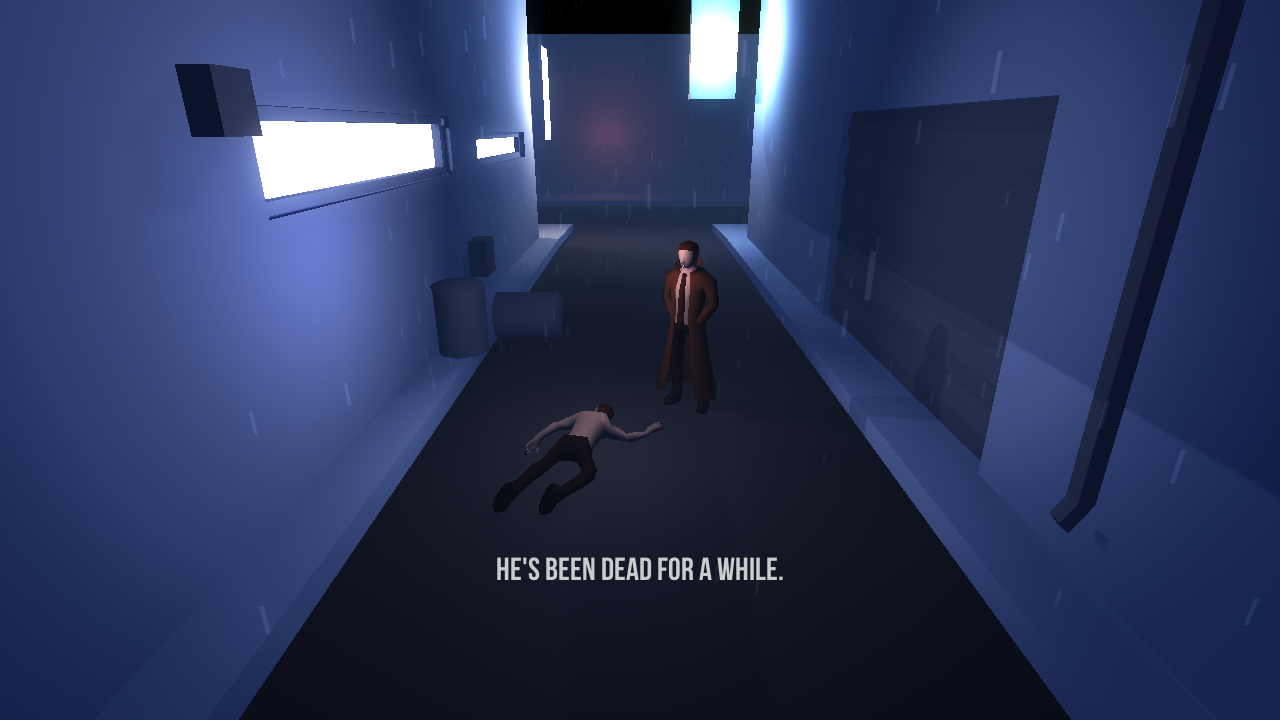 The first prototype, the detective standing over the body.
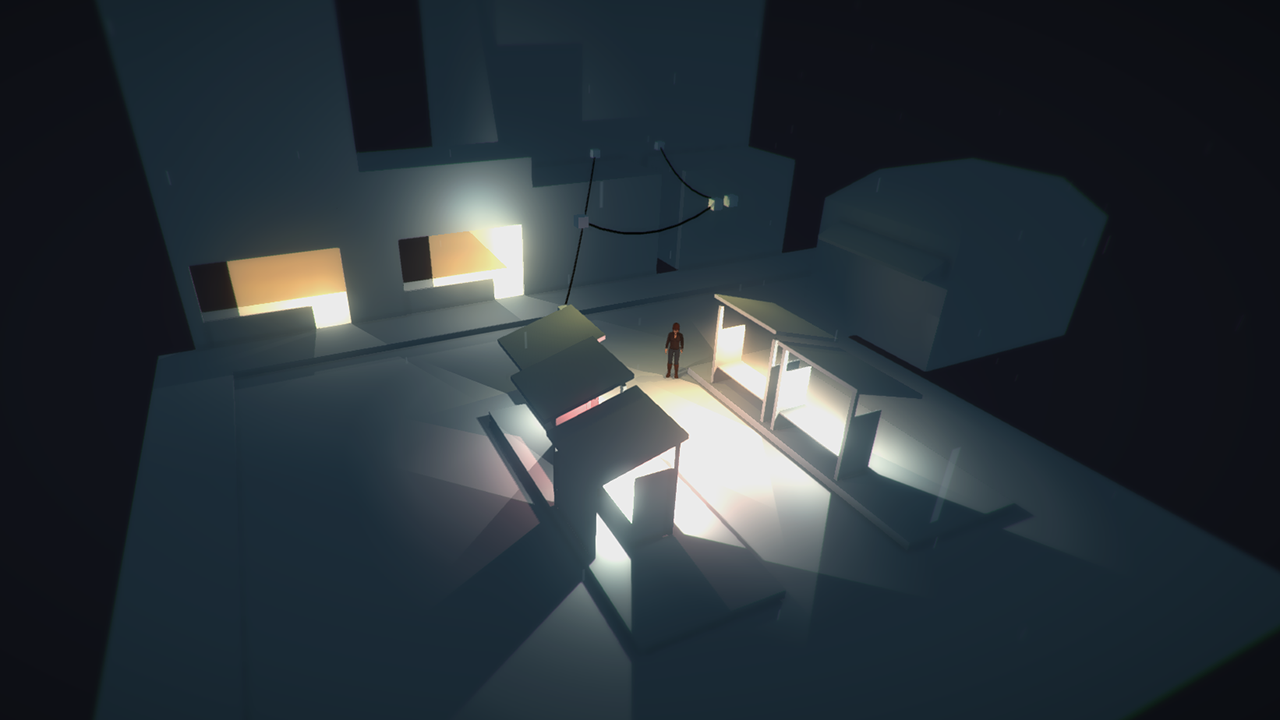 The prototype grew into a night‑market scene which I later abandoned.
Implementing the point‑and‑click layer was the most fun. Hovering over an interactable object switches out the object to a duplicate of the 3D mesh, but with an additive shader, offset slightly to create an animated hover effect.
Clicking an object queues a pathfinding action to have the character walk over, then opens a dialogue window. All dialogue was authored in Twine for fast iteration. Each Twine file is assigned to an object in the editor.
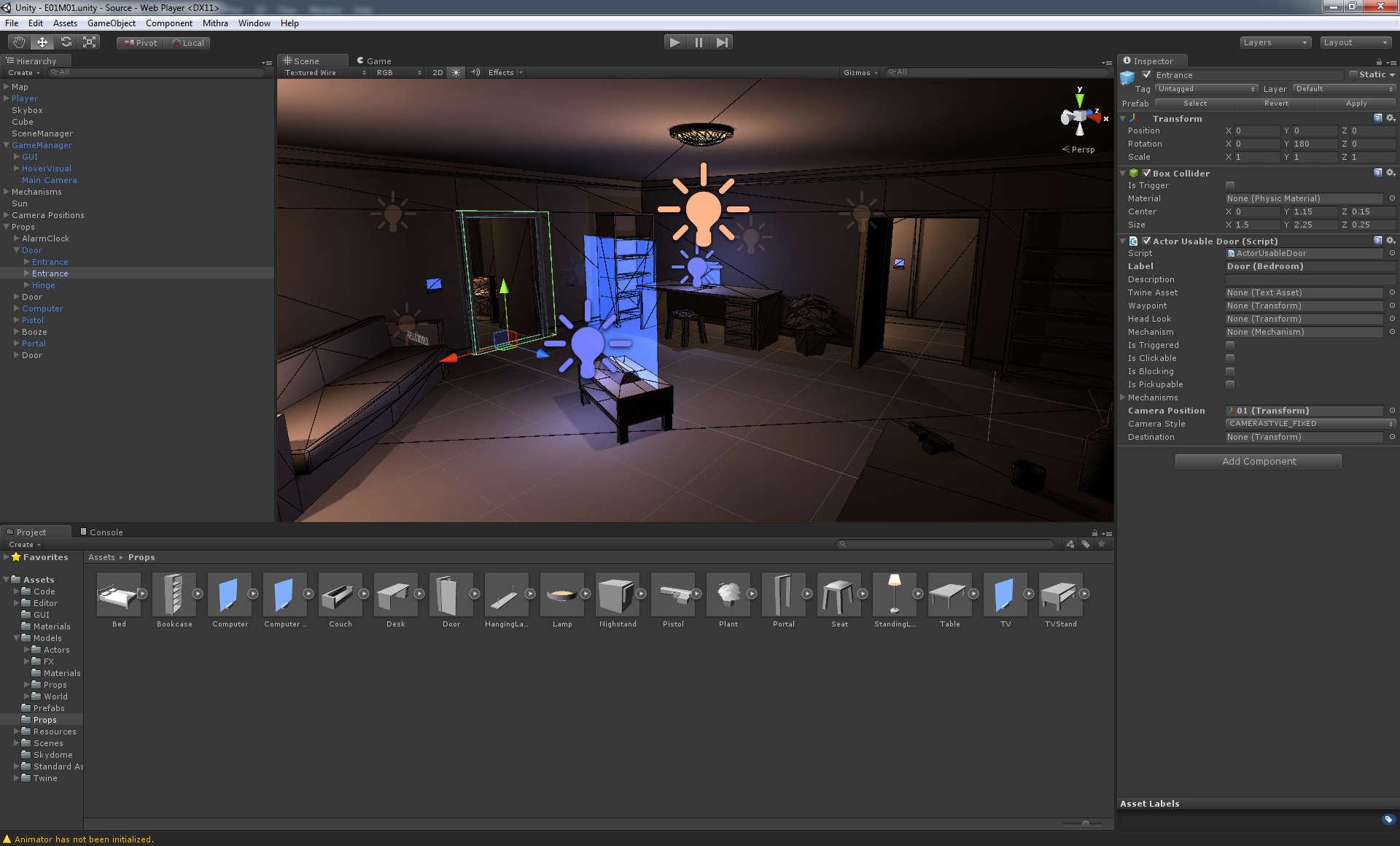 Scene management inside the Unity editor.
Late in development I added a computer terminal. This is where the detective investigates the crime scene and the victim’s computer files. It accepts real keyboard input, plays tactile clicky typing sounds, validates input against a list of possible commands, renders text off‑screen on a texture, then draws it in the game world. There was groundwork for browsing around the full hard-drive too, but I couldn’t flesh it out before the deadline.
All the assets were modeled in Blender, and placed in Unity using a strong directional light and bloom effects. A simple additive skybox helped sell the glow coming through the windows. Most props were simply left flat‑shaded.
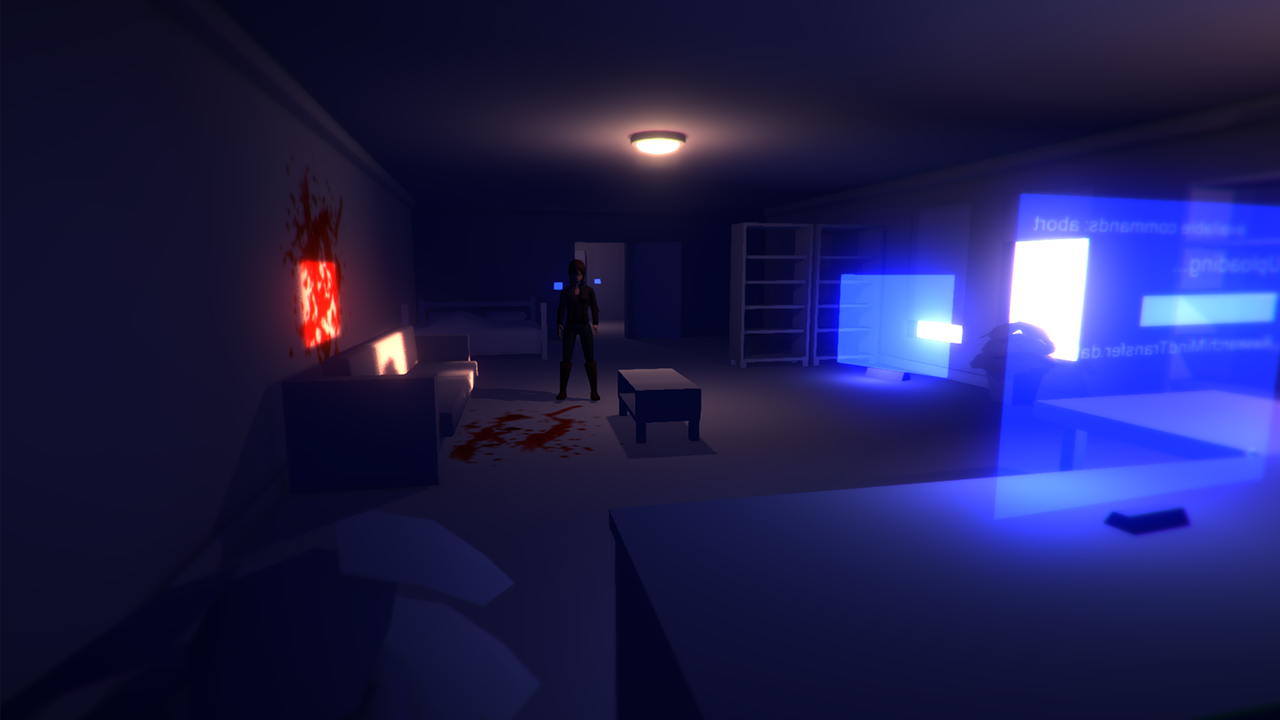 The computer is placed close to camera in the finale to signal its importance.
Character work was hardest for me. I usually build “cute” stylized things, so a life-like human posed some challenge. The walk cycle went through many iterations (and some friends on Twitter laughed when they saw it, grrr). It’s still imperfect, and the slight slide from idle to walk cycle still bothers me, but it reached an acceptable level for the jam.
Building Compute Thought in roughly two weeks of spare time was satisfying. I probably wrote more words in this post than all of the game’s dialogue, still plenty to learn on the narrative side. With more time I would have added more interactions and expanded on existing systems; for a story‑driven game, interactivity is thin.
As my first itch.io release it performed modestly, about eight plays a day, fine for a game jam entry though, and likely more than my Ludum Dare #29 game.